Industry leaders say the BCLDB’s misinterpretation of the Vintage Replacement Program is adding an 89% markup to fully BC-grown wines, threatening small and mid-sized producers already hit hard by the 2024 freeze. The freeze wiped out large tracts of the Okanagan Valley crop, forcing many producers to rely on imported grapes to stay in business.
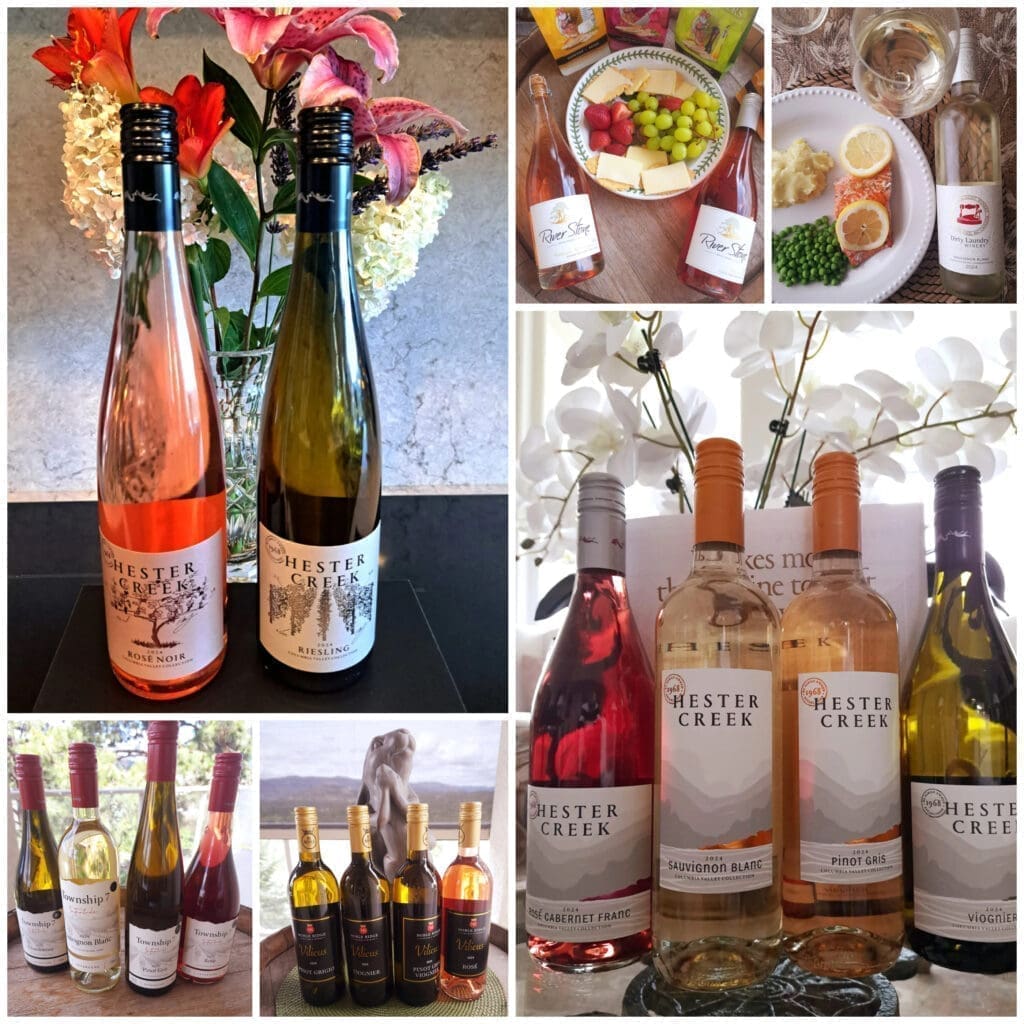
The “Olympic Average” has become one of the most debated policies in the British Columbia wine sector this year—a once-obscure accounting tool now pushed into the spotlight as small and fast-growing wineries work to recover from the devastating 2024 deep freeze. What was designed as a lifeline is, according to multiple producers, now functioning as a penalty.
What Is the Olympic Average?
The Olympic Average is part of the province’s Vintage Replacement Program, which allows wineries to use imported grapes (typically from Washington State) in years of catastrophic crop loss while still receiving the same markup relief they would have earned on wine made from 100% BC grapes.
The policy was created to:
- keep wineries producing wine despite climate-related losses
- keep the BC wine economy functioning
- remain revenue-neutral for the government
- prevent business closures during extreme weather events
The eligibility cap is calculated using the past five years of qualifying BC production. The highest and lowest years are removed, and the remaining three are averaged—an approach known as the Olympic Average.
For land-based wineries, this markup relief is crucial. Without it, even wines made entirely from BC grapes can suddenly face an 89% markup, making them dramatically less viable.
Where the System Is Breaking Down
Wineries and industry leaders argue that the BCLDB’s current interpretation of the Olympic Average goes far beyond the policy’s original intent—and is disproportionately harming the very wineries it was meant to protect.
This comes at a time when a record number of BC wineries are relying on imported fruit to survive following the 2024 freeze. For a broader context, see Crafted in BC Wines – Keeping the Heart of BC Winemaking Alive
Lightning Rock Winery: A Case Study in Policy Misapplication
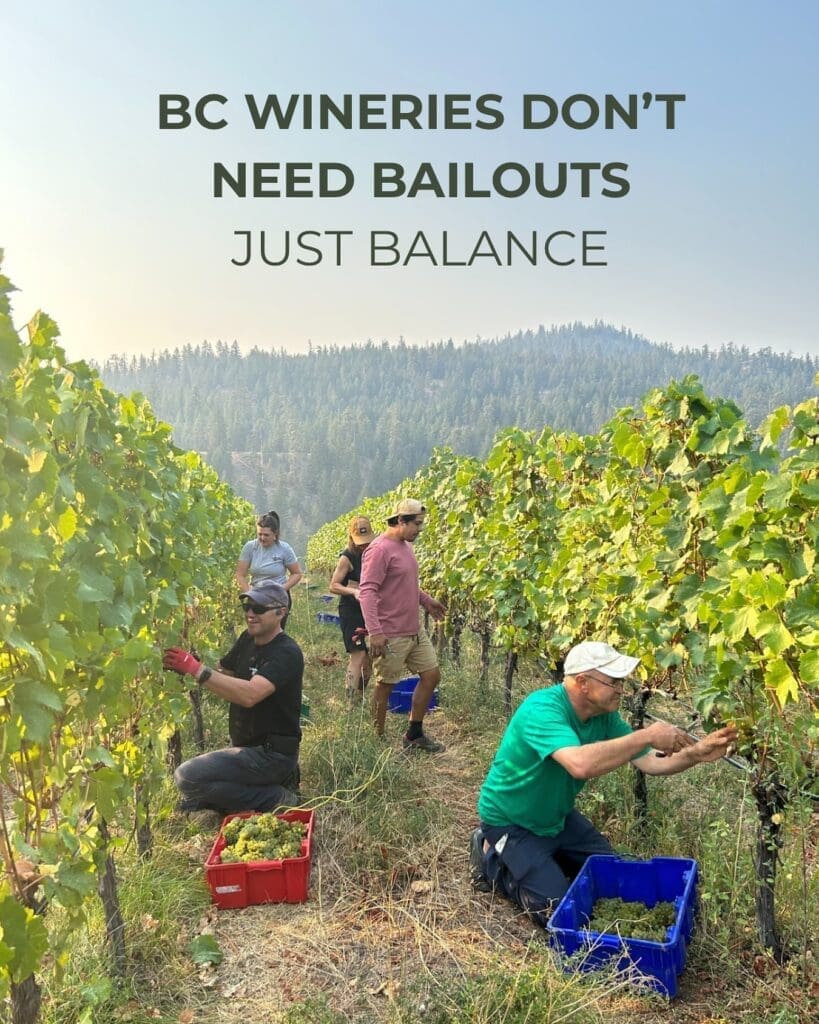
Lightning Rock owner Ron Kubek has emerged as the most publicly vocal critic of the policy’s misapplication.
In an October 29 statement, he explained:
“The BCGEU strike slowed wine distribution across the province, and small wineries like ours were ready to help fill the gap. But the way the Olympic Average policy is currently being applied is making it harder, not easier, for family-run businesses.”
“If a winery replaces 100 cases lost to freeze with imported grapes, it should receive markup relief on those 100 cases—no more, no less. But under the current interpretation, when we later sell our older 100% BC wines, that relief gets used up. The result? We end up paying markup on BC-grown wine, and there’s not enough relief left for the imported replacement wine.”
“That’s not revenue-neutral; it’s the opposite.”
“We want to thank Minister Lana Popham and her team for their continued engagement and leadership. With support from Treasury Board and the BCLDB, we’re confident this policy can be restored to what it was always meant to be: fair, transparent, and balanced.”
“BC wineries don’t need bailouts, just balance. Let’s make common sense the policy again.”
Kubek’s explanation illustrates the core flaw: the program is using up subsidy room on older, fully BC-grown wines, leaving no relief for the imported grapes it was designed to support. As a result, wineries risk being hit with the full 89% markup even on true BC wine—an outcome directly opposite the policy’s purpose.
Industry Response from Wine Growers British Columbia
Wine Growers BC CEO Jeff Guignard confirms the industry is unified in its concern. He says the BCLDB is applying the Olympic Average far too broadly, effectively imposing a new tax on small and mid-sized producers.
Guignard has been advocating for a simple, revenue-neutral correction:
“If it’s 100% BC wine made in a previous year, unrelated to any imported fruit, it shouldn’t be part of that calculation.”
He stresses the industry is not asking for new subsidies or bailouts—only that the policy be applied as originally intended: consistently, fairly, and transparently.
Why This Matters for the Future of BC Wine
The current interpretation risks:
- penalizing fast-growing wineries that have expanded production
- discouraging long-term vineyard investment
- reducing the availability of true BC-grown wines
- slowing the industry’s recovery from the 2024 freeze
- destabilizing a sector already under climate and cost pressures
For many producers, the Olympic Average has shifted from a safety net to a bureaucratic tripwire. Industry leaders argue that a minor administrative fix could restore fairness and stability while preserving the program’s original purpose: protecting BC wineries—not taxing them.
Reference:
- B.C. government extending vintage replacement support comes too late, by Sean P. Sullivan, September 25th, 2025