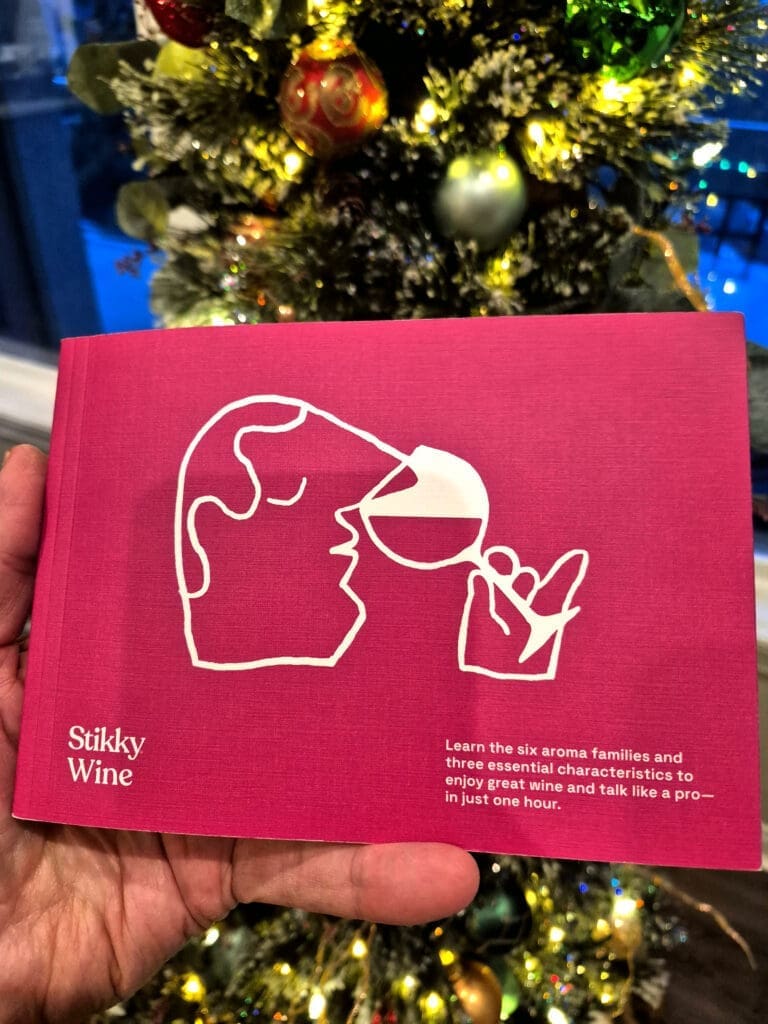
Stikky Wine is one of the most approachable, cleverly designed, and genuinely useful beginner wine guides on the market—a short but surprisingly smart book that teaches wine the way people naturally learn: through visuals, patterns, simple rules, and confidence-building “aha” moments. Rather than bury readers in jargon or geography, it breaks wine education down into digestible steps that feel intuitive, friendly, and even a little fun.
Section 1: A Humorous, Visual, Confidence-Boosting Introduction to Wine
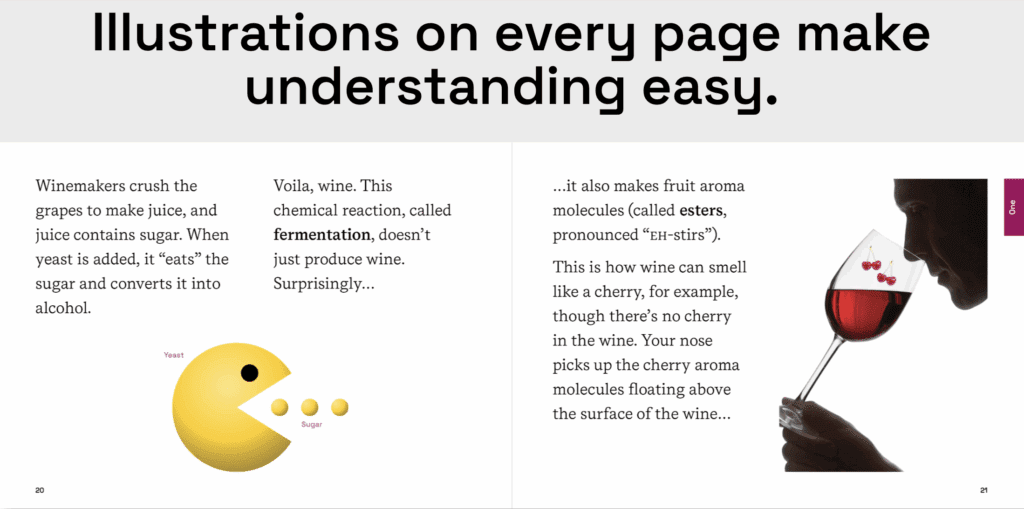
The first 50 pages set the foundation by walking readers through wine’s ancient origins and the fundamentals of tasting—especially the importance of aroma. Instead of lecturing or overwhelming, the book uses:
- clean diagrams
- simple sensory cues
- relatable humour
- short, focused lessons
What makes this opening section stand out is the design. Every page gives you one meaningful insight you can remember—how flavour actually works, why smelling wine matters more than swirling it, and how you can confidently describe what’s in your glass even as a beginner. The visuals act as anchors, making the early lessons stick (true to the book’s name).
By the time readers finish this section, wine feels less like a subject to “master” and more like a playful skill that grows with every glass.
Section 2: How to Pick, Order, and Pair Wine Like a Pro
If the first section teaches you how to taste wine, the second teaches you how to use that knowledge in the real world.
In Section 2, Stikky Wine covers several practical topics:
How to pick wines confidently in any store
Readers learn the cues that matter (grape, region, style) and the ones that don’t (overly decorative labels, marketing fluff). The book demystifies price, teaches how to spot value, and offers simple heuristics that help even absolute beginners make smart choices.
How to navigate a restaurant wine list
This is one of the most practical parts of the book. It explains:
- How to read a list strategically
- When to ask questions (and what to ask)
- How to avoid common pitfalls
- Why the “second-cheapest bottle” cliché is usually wrong
It’s the kind of guidance that instantly raises your comfort level in restaurants.
How to pair food with wine
Rather than relying on dense pairing charts, the book gives a handful of smart rules:
- match intensity between food and wine
- balance salt, fat, acid, and sweetness
- lean on classic pairings when in doubt
It turns food pairing from an intimidating art into a simple, flexible framework.
When it’s appropriate to send a wine back
This section is refreshingly direct. It clarifies:
- When flaws are real and the wine is genuinely faulty
- What is (and isn’t) acceptable to return
- How to handle the situation politely and confidently
This alone is worth the price for many readers, as it removes one of the last remaining anxieties around restaurant wine.
Section 3: A Final Test to Challenge Your Tasting Skills
In the third, epilogue-style section, the book includes a tasting challenge: a friendly, low-pressure “test” that invites you to apply everything you’ve learned.
It’s not a formal exam—it’s more like a self-check to gauge your progress:
- Can you identify core aromas?
- Can you place a wine’s style?
- Can you recall the simple rules from earlier sections?
It reinforces the idea that tasting is a skill you develop through repetition, not a subject you cram.
Section 4: Next Steps, Glossary, and Where to Learn More
The final section serves as a guide to further exploration, offering a gentle nudge.
A glossary of essential wine terms
The glossary is short, crisp, and practical—perfect for beginners who want a quick reference rather than a textbook. It’s the kind of back-of-the-book resource you can flip to when a term comes up at a tasting or on a label.
Suggestions for continued learning
Rather than pretending the book is comprehensive, the authors encourage readers to keep exploring, tasting, and building their sensory vocabulary. The tone stays friendly and realistic: this is a starting point, not the final word on wine.
An online resource at stikky.com/wine
The book suggests that additional information will be available online, pointing readers toward future tools and resources at stikky.com/wine. It’s an honest and useful way to wrap up the book—acknowledging that wine knowledge is a journey but giving readers a clear path forward.
Final Thoughts
Stikky Wine succeeds because it respects the reader’s time and intelligence. It delivers high-quality wine education in a format that feels effortless, friendly, and practical. Between its humour, clear visuals, and smart structure, the book makes wine feel simple without ever dumbing it down.
For new wine lovers, casual drinkers, or anyone who wants a fast, confidence-building introduction to tasting, choosing, ordering, and pairing wine, Stikky Wine is an unexpectedly brilliant place to start. The first section lays a strong sensory foundation, the second puts those insights into practice, the third challenges you to test your skills, and the final section points the way forward.
In a crowded field of wine books, this slim, approachable guide stands out as one of the most effective and genuinely accessible starting points you can put on your shelf—or in someone’s stocking.
Here is the link to purchase.