
Okanagan Wineries Worth Visiting for Architecture Alone
For years, wine travel writing has followed a familiar script: where to stay, where to taste, where to eat. Useful, yes, but increasingly incomplete.
As the wine industry undergoes a structural shift toward direct-to-consumer sales, wineries are no longer competing only on what’s in the bottle. They are competing on why someone should make the trip at all. In that equation, architecture has quietly become one of the Okanagan’s most powerful advantages.
These are wineries that create memories before the first glass is ever poured. Places where design, landscape, and intention combine, because memory is what brings visitors back.
Globally, winery architecture has become a competitive advantage, from Napa and Rioja to South Africa and Chile. What’s striking is how closely several BC wineries now align with international benchmarks for architectural ambition.
While this article focuses on the Okanagan, the ideas apply to wine regions everywhere, competing for destination visitors.
Lake Country: Theatre, Immersion, and the Future of Winery Design
Lake Country has emerged as one of the most architecturally ambitious sub-regions in the Okanagan. Cooler climate, elevated sites, and dramatic lake views set the stage—but it’s the visitor experience that now defines the area.
50th Parallel Estate Winery
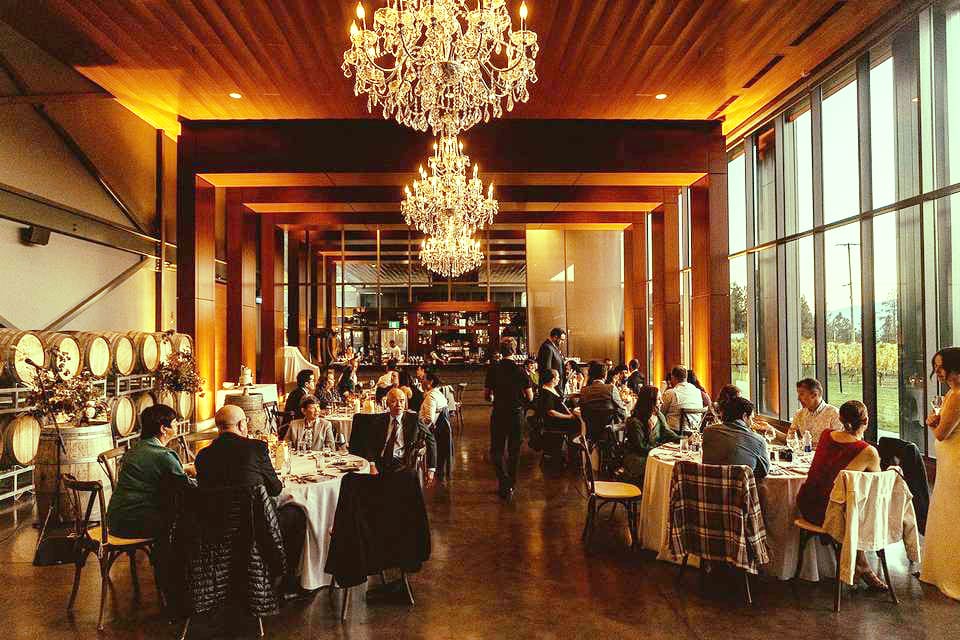
There are few tasting rooms in Canada that make a first impression quite like 50th Parallel.
Step inside and you’re greeted not by rustic charm or minimalist restraint—but by a chandelier. It’s a deliberate statement: this is not a farm shed with barrels. This is a destination.
The architecture blends European polish with Okanagan openness. High ceilings, formal symmetry, and generous glass invite guests to linger. It’s theatrical without being ostentatious—proof that winery design can feel elevated while remaining welcoming.
Where else do you encounter a chandelier during a tasting? Exactly.
O’Rourke Family Estate
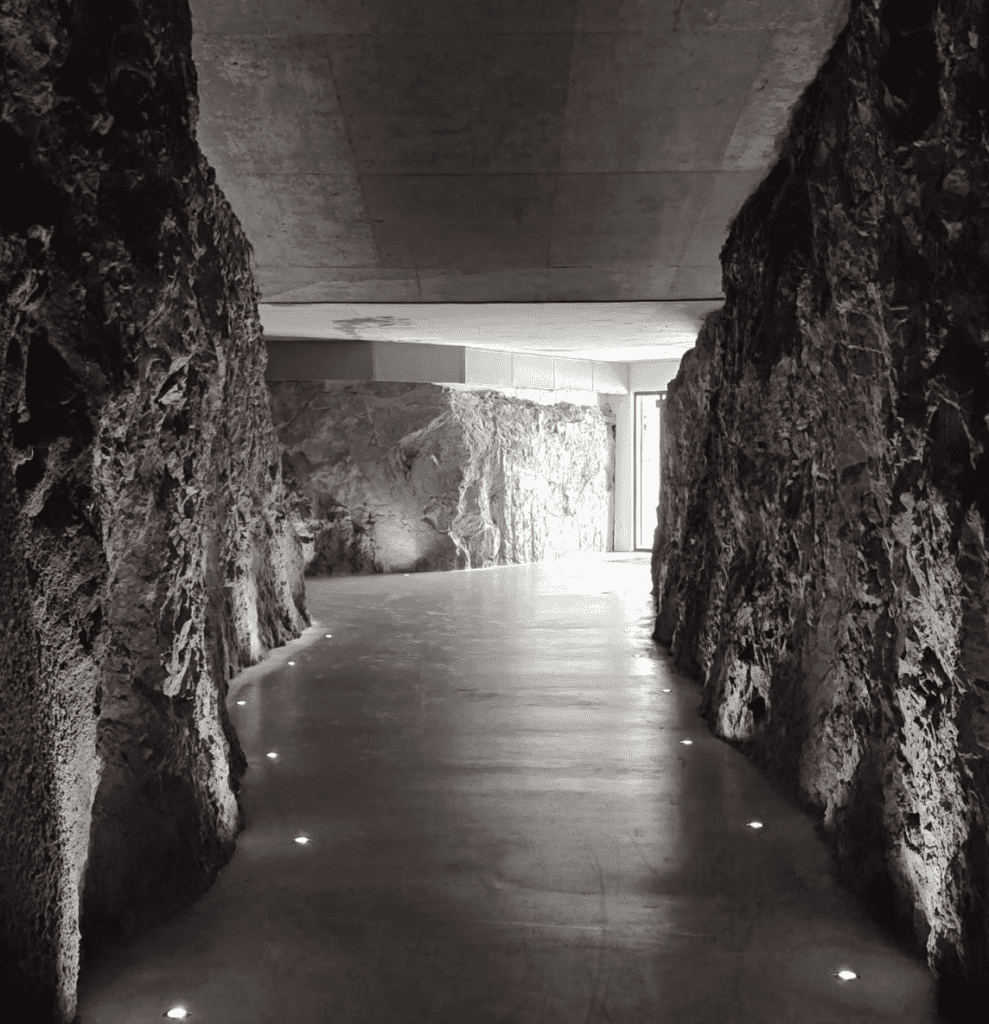
If 50th Parallel introduces theatre, O’Rourke Family Estate delivers immersion.
The winery’s defining architectural feature is its cellar cave, carved directly into the hillside. Descending into the space feels less like entering a winery and more like stepping into a European domaine—or a modern cathedral devoted to wine.
Caves do something powerful: they remove the outside world. Temperature drops, sound softens, and attention sharpens. Wine becomes the focus.
The architecture reinforces a seriousness of intent. This is a winery built to age wines—and experiences—over time. It’s tactile, enveloping, and unforgettable.
Together, 50th Parallel and O’Rourke reveal two sides of Lake Country’s architectural personality: celebration above ground, contemplation below.
Reference: O’Rourke Family Estate
Azhadi Vineyards (opening soon)
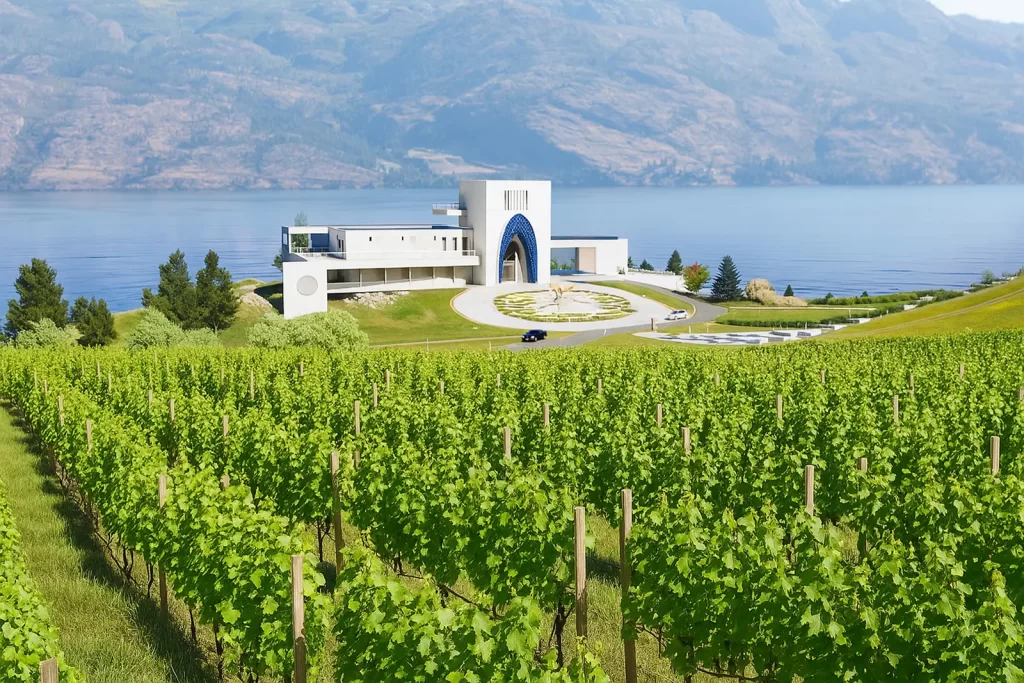
Azhadi Vineyards represents the most culturally distinctive winery architecture project the Okanagan has seen in years.
Founded by the owner of Ex Nihilo Vineyards, Azhadi introduces Persian-inspired architecture into an Okanagan vineyard setting—an unmistakable departure from European wine traditions.
Persian architecture emphasizes geometry, symmetry, balance, and reflection. It is experiential rather than ornamental, designed to slow movement and encourage contemplation. Stone, courtyards, and axial alignment create harmony between land, structure, and visitor.
This is architecture rooted in heritage rather than imitation. With Azhadi, Lake Country positions itself as the place where the next chapter of Okanagan winery design is being written.
Reference: Azhadi Vineyards
Where to Stay: Architecture Beyond the Vineyard
Just 20 minutes from 50th Parallel Estate Winery, O’Rourke Family Estate, and Azhadi Vineyards, visitors will find one of the Okanagan’s most distinctive architectural destinations of all: Sparkling Hill Resort.
Perched above Lake Okanagan, Sparkling Hill is a study in modern alpine design and wellness-focused architecture. Its soaring glass walls, geometric forms, and dramatic views echo the same themes found in Lake Country’s wineries—intentional design, immersion in landscape, and a sense of occasion.
The proximity matters. It allows Lake Country to function not just as a tasting corridor, but as a self-contained luxury wine destination, where visitors can move seamlessly from architecturally ambitious wineries to a resort that extends the experience well beyond the vineyard.
In practical terms, it means you can taste by day, unwind by night, and return to the vineyards the next morning without ever feeling rushed, exactly the kind of travel rhythm wineries are hoping to encourage.
For travellers planning a longer stay, both O’Rourke Family Estate and Summerhill Pyramid Winery are also featured in our guide to BC wineries with accommodation, underscoring how architecture and hospitality are increasingly intertwined in wine country travel.
Kelowna: Architecture as Belief
Summerhill Pyramid Winery
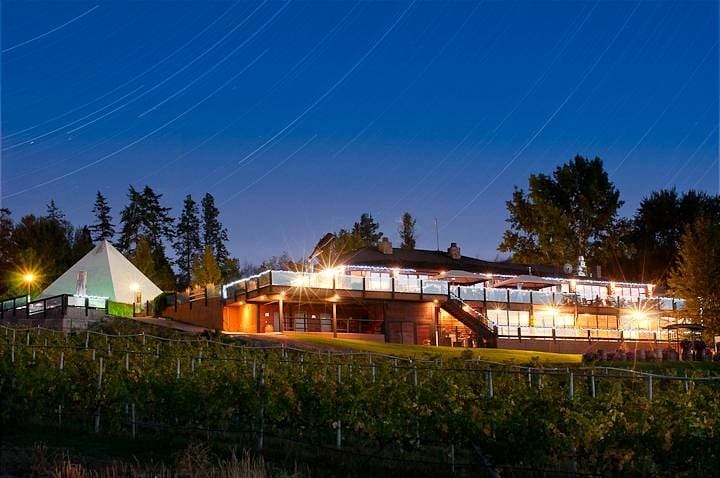
No winery in the Okanagan demonstrates architecture as belief quite like Summerhill.
At the heart of the estate stands the Pyramid Cellar, built according to principles of sacred geometry and inspired by ancient Egyptian design. Constructed to precise proportions, the pyramid is said to enhance energy, preserve wine quality, and support balance.
Visitors may arrive as skeptics or believers—but everyone remembers the experience.
Summerhill’s architecture is philosophical, not fashionable. It aligns seamlessly with the winery’s long-standing commitment to biodynamics, organic farming, and holistic practices.
In a region dominated by modern restraint and monumental icons, Summerhill stands apart—proof that authenticity matters more than consensus.
Reference: Summerhill Pyramid: The Pyramid Cellar
West Kelowna: The Icon — Now Globally Recognized
Mission Hill Family Estate
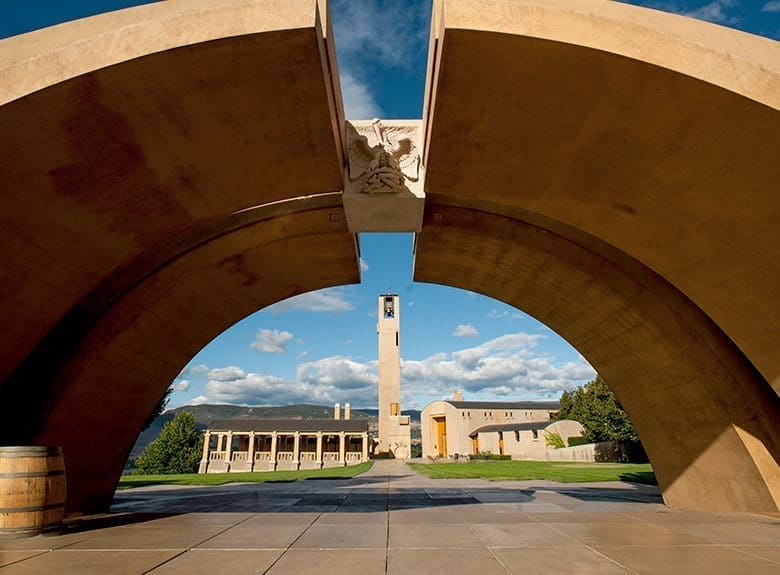
Any discussion of winery architecture in British Columbia begins here.
Mission Hill Family Estate transformed wine tourism in BC by introducing ceremony and scale. Its bell tower, colonnades, reflective pools, and amphitheatre, like spaces elevated tasting into ritual.
What makes Mission Hill especially relevant today is that its architectural ambition has been validated globally. In 2025, the estate was named to the World’s 50 Best Vineyards, placing it among the most compelling wine destinations globally. The recognition celebrated the complete visitor experience—architecture, setting, hospitality, and sense of place.
Mission Hill is no longer just a BC icon. It is a globally recognized destination winery.
Reference: B.C. winery named among the World’s 50 Best Vineyards (Yahoo Canada)
Oliver: Precision, Restraint, and the View
Phantom Creek Estates
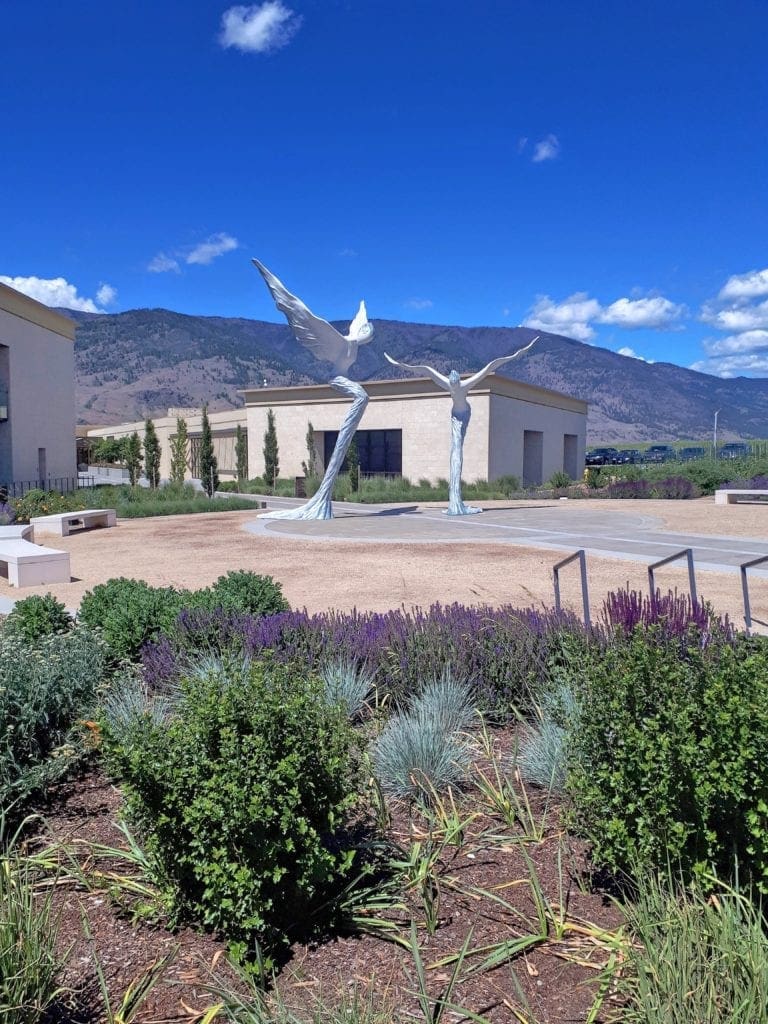
Phantom Creek Estates exemplifies architectural discipline in the South Okanagan.
The winery integrates seamlessly into the landscape, using low profiles, subdued materials, and carefully framed sightlines. The result is calm, controlled, and quietly luxurious.
As you once wrote, “Come for the wine, stay for the view.” Phantom Creek’s architecture succeeds because it knows when to step back.
Related: Phantom Creek Estates: Come for the Wine, Stay for the View
Together, these wineries show how architecture has become a quiet but powerful driver of wine travel in the Okanagan.
What These Wineries Reveal About the Okanagan
Taken together, these estates chart the evolution of Okanagan winery architecture:
- From borrowed European styles to personal cultural expression
- From spectacle to intention
- From tasting rooms to immersive destinations
Architecture has become storytelling—immediate, emotional, and memorable. It encourages travel, extends visits, and deepens connections.
The Okanagan is no longer just building wineries. It is building places worth remembering, and that may matter as much as what’s in the glass.
Editor’s note: This article was inspired in part by Tom Wark’s January 2026 essay, “Eight Examples of Wine Travel Writing That the Wine Industry Needs,” which argues that wine media can best support wineries right now by encouraging people to visit wine regions, not just learn about wine. The Okanagan’s growing emphasis on architecture-led experiences offers a compelling local expression of that idea.
Author’s Note: This article was researched, written, and formatted by Julian Park, with ChatGPT support to enhance structure, data integration, and editorial clarity.