The 2026 BC wine harvest is well underway. Some wineries have already finished, but this vintage defies a simple summary.
Across much of the Okanagan, an early growing season and warm summer pushed grapes toward ripeness well ahead of normal. Several wineries have reported their earliest picking dates on record, while producers in Lake Country, Kelowna, Naramata and the Similkameen are sharing encouraging reports of fruit quality and balance.
At Ex Nihilo Vineyards in Lake Country, senior winemaker Jim Faulkner reports concentrated fruit, evenly ripening tannins and vibrant natural acidity. In East Kelowna, SpearHead has announced it has completed its harvest, while Bottega Wine Studio reports bringing in Grenache and Cabernet Franc.
But the picture changes dramatically around parts of Summerland, where the Bald Range wildfire and prolonged smoke exposure have left some wineries with little or no usable estate fruit.
Harvest timing continues to vary by vineyard and grape variety. With some producers finished and others still bringing in fruit, the region’s final assessment of reds will become clearer in the weeks ahead.
The 2026 story is far from finished.
A Record-Early Start to Harvest 2026
The early pace was evident before September even began.
At Quails’ Gate Winery in West Kelowna, viticulturist Rowan Stewart said the growing season had been running eight to 10 days ahead of 2025, itself an unusually early year. Quails’ Gate began picking grapes for sparkling wine on August 26 — the earliest harvest start in the winery’s history. Its previous record was September 1, 2025.
A day later, on August 27, River Stone Estate Winery began harvesting Sauvignon Blanc. Founder Ted Kane described it as approximately one to two weeks earlier than normal and the earliest harvest in his 23 years of growing grapes.
By early September, Little Straw Vineyards in West Kelowna was harvesting white varieties, including Pinot Gris.
At Mission Hill Family Estate, Chief Winemaker Taylor Whelan also described 2026 as a particularly early harvest. After a warm start to the season, followed by a cooler period and then renewed summer heat, Whelan said the fruit showed very good quality and balance. Before the smoke issues emerged, he said the vintage was tracking toward being one of Mission Hill’s best.
That assessment is important. Smoke has unquestionably affected some vineyards, but it does not define the entire 2026 vintage.
East Kelowna Shows Why Harvest Dates Aren’t Everything
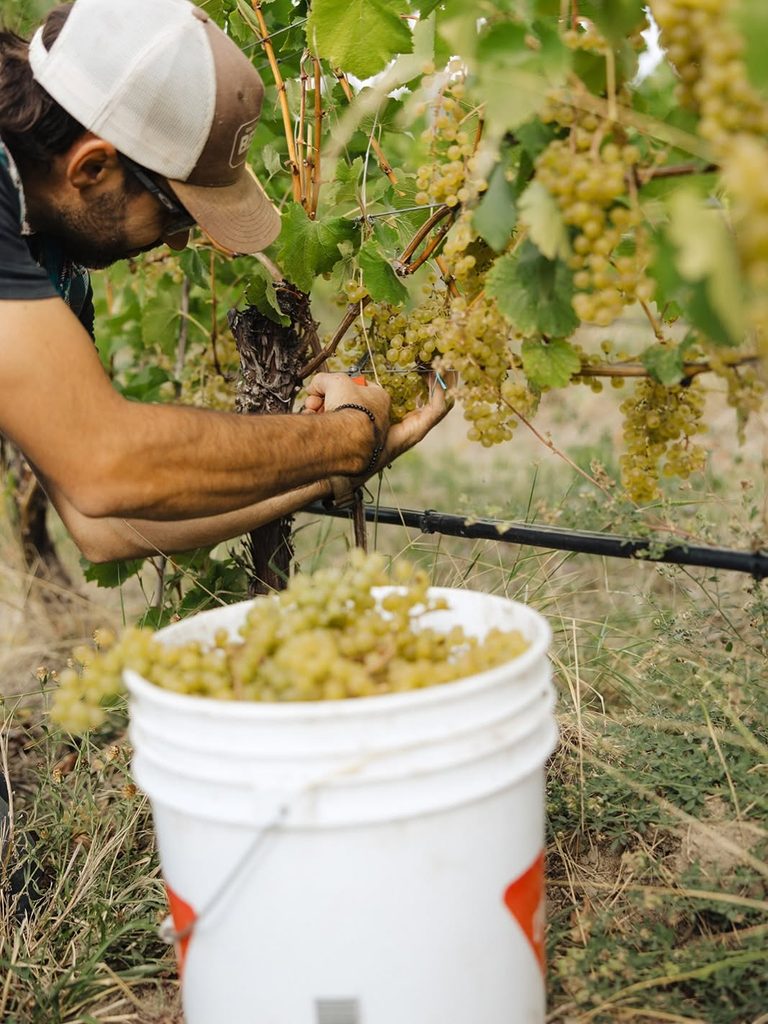
Perhaps the most interesting illustration of the vintage is unfolding in East Kelowna, where two highly regarded producers have taken very different approaches.
Tantalus Vineyards completed its estate harvest on October 1 — the earliest finish ever recorded at its East Kelowna site. The final grapes were Riesling from Block 3, a 21-year-old planting immediately in front of the winery.
Tantalus is still expecting a couple of parcels from grower partners in Osoyoos, but its home vineyard harvest is complete.
Nearby SpearHead Winery, however, was deliberately waiting.
Winemaker Grant Stanley explained that despite considerable harvesting already taking place around the valley, SpearHead had not yet started picking its Pinot Noir.
The reason was not that the grapes were behind. Stanley wanted to take advantage of what he described as “perfect September conditions” — really cold nights and lovely warm days. Those conditions were providing an extra “little bit of pop and ripeness” before harvest.
Stanley explained that Pinot Noir requires more than simply reaching the desired sugar level and acidity. He was also waiting for phenolic ripeness — ripe skins and ripe seeds to accompany the sugar ripeness.
It is an excellent reminder that an early vintage doesn’t mean every winery wants to pick early. Even neighbouring vineyards can make very different decisions depending on site, variety and the style of wine the winemaker wants to produce.
Similkameen Harvest Moves Into Merlot
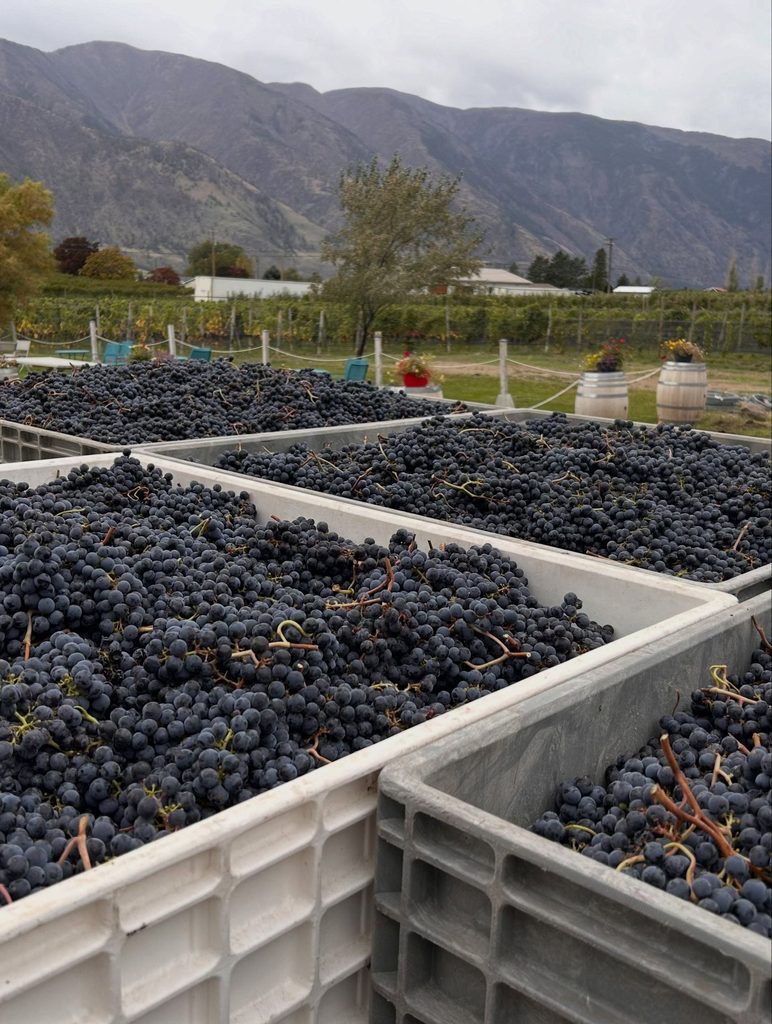
The Similkameen Valley is now moving from white varieties into its red harvest.
At Clos du Soleil, Chardonnay from the winery’s La Côte Vineyard was harvested in late September. The small-lot 2026 Chardonnay will be wild-fermented in older French oak puncheons, letting the fruit and vineyard character take centre stage.
On October 2, Clos du Soleil began bringing in Merlot destined for its red blends, describing the 2026 harvest as “a beauty.”
Master of Wine and Little Farm Winery co-proprietor Rhys Pender has offered one of the more useful assessments of the vintage. Pender cautioned against assuming that smoke in the air automatically means smoke-affected grapes.
The potential impact depends on grape variety, the stage of development when smoke was present, vineyard location and even individual blocks. His late-September assessment was that smoke-affected fruit would occur, but that the effects would be case-by-case rather than uniform across BC wine country.
Naramata Bench: Encouraging Fruit Reports, but Smoke Concerns Remain
The Naramata Bench is moving steadily through the 2026 harvest, with encouraging reports from some producers. However, vineyard appearance and crop size tell only part of the story, as Township 7’s latest update demonstrates.
An earlier Wine Growers British Columbia report quoted Township 7 winemaker Mary McDermott as describing excellent-looking fruit, healthy vines, and an average-sized crop at the winery’s Naramata Bench vineyard.
In a September 24 update, Mary reported that testing in vineyards from Osoyoos to Naramata had identified elevated levels of volatile phenols associated with smoke exposure. Concern that these compounds could develop into smoke taint as wines age led Township 7 to make the difficult decision not to harvest Okanagan Valley fruit in 2026.
Brighter news came from the winery’s Langley estate, where Township 7 harvested 6.8 metric tonnes of Pinot Noir and Chardonnay.
Harvest is also progressing at Howling Bluff and Tightrope Winery. Township 7’s decision should not be taken as evidence of losses across the entire Bench, but it highlights why early reports of promising fruit need to be considered alongside subsequent testing and individual winery decisions.
Golden Mile Harvest Moves Quickly
Farther south, harvest is moving rapidly.
By September 30, Hester Creek Estate Winery had already received approximately 800 tons of grapes, with the winery describing the harvest as “amazing” so far.
At nearby Bartier Bros. Vineyard & Winery in Oliver, the progression is clearer. Sémillon was ready in late September and by October 1 the Chardonnay was in and had reached the press.
Only Merlot and Cabernet Franc remained to be picked from Cerquiera Vineyard.
The picture as October begins is clear: substantial quantities of fruit are already in, while important late-ripening reds remain on the vines.
Okanagan Falls Nears the Finish Line
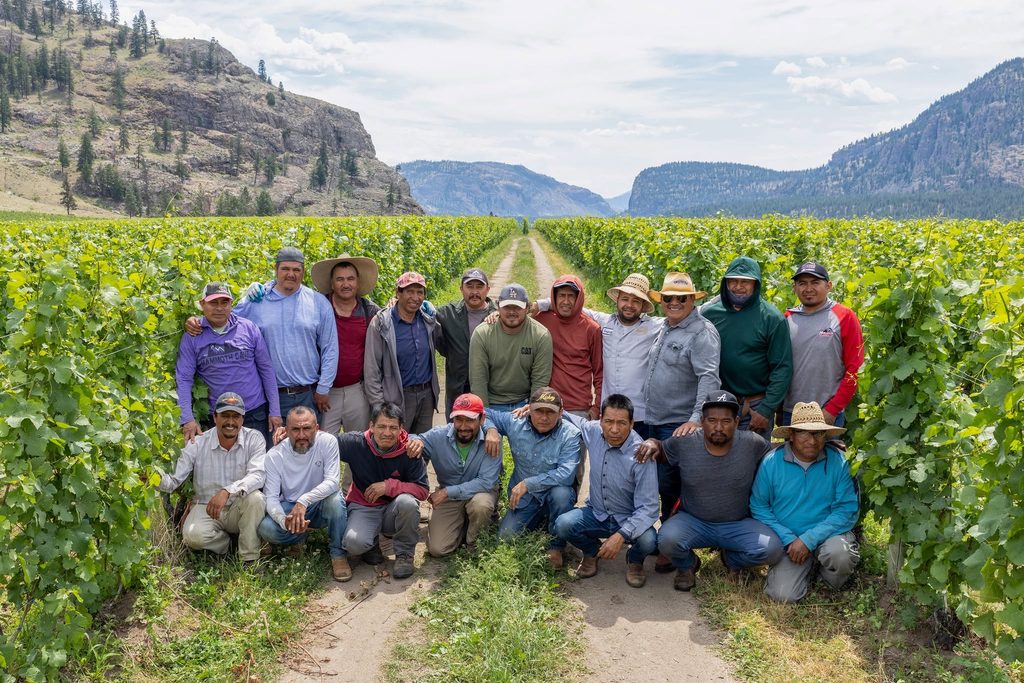
Photo: Blue Mountain Vineyard and Cellars.
The early pace extends south to Okanagan Falls.
By September 24, Blue Mountain Vineyard and Cellars reported that it was already nearing the end of Harvest 2026, another indication of just how advanced the vintage has become at some sites.
The winery used the occasion to recognize the vineyard crew behind the vintage, a reminder that picking dates may make the headlines, but getting fruit into the winery at precisely the right moment depends on the people working the vineyards.
The Late Reds Are Still to Come
Despite the record-early start, it is too soon to declare the entire 2026 vintage exceptionally early.
Cabernet Sauvignon is one of the Okanagan’s latest-ripening varieties and is commonly harvested in late October or even early November. We have not yet seen evidence of widespread Cabernet Sauvignon harvesting in the South Okanagan.
Merlot is beginning at individual sites. Azhadi Vineyards in Kelowna brought in estate-grown Merlot in late September, while Clos du Soleil followed with Similkameen Merlot on October 2.
But the next few weeks will tell us whether the remarkable head start seen with sparkling grapes, whites, Gamay and Pinot Noir carries through to the Okanagan’s major late-ripening reds.
Summerland Faces a Very Different Harvest
The encouraging reports elsewhere contrast sharply with the experience of several Summerland wineries.
The Bald Range wildfire caused direct fire damage, evacuations, lost tourism revenue and significant smoke exposure at vineyards in and around Summerland.
At Garnet Valley Ranch Winery, owner Christine Coletta reported that smoke-damaged grapes were picked and dropped to the ground to relieve stress on the vines. The winery produced approximately 6,000 cases last year but expects no 2026 production from Garnet Valley Ranch.
Nearby Solvero Wines has also suffered a dramatic loss.
Winemaker Alison Moyes said Solvero had expected to harvest approximately 60 tonnes of grapes this year. Instead, the winery expects to process only about six tonnes — roughly 10% of the original plan — sourced from the Fraser Valley.
Moyes has emphasized that smoke effects vary dramatically from site to site — an observation consistent with reports we’re hearing elsewhere.
Lightning Rock Will Make a 2026 Vintage — But Not the One It Planned
After testing grapes from its Summerland vineyards, Lightning Rock Winery decided not to use its estate crop because of smoke damage. But there will still be a Lightning Rock 2026 vintage.
Winemaker Sébastien Hotte has been visiting growers in less-affected areas, collecting samples and making small test batches before purchasing fruit.
Lightning Rock is now sourcing grapes from Cawston, elsewhere in the Similkameen, Osoyoos and other locations, bringing that fruit back to Summerland for winemaking.
Owner Ron Kubek expects production of approximately 1,500 cases this year, compared with around 5,000 cases last year.
Crop Insurance Adds Another Problem
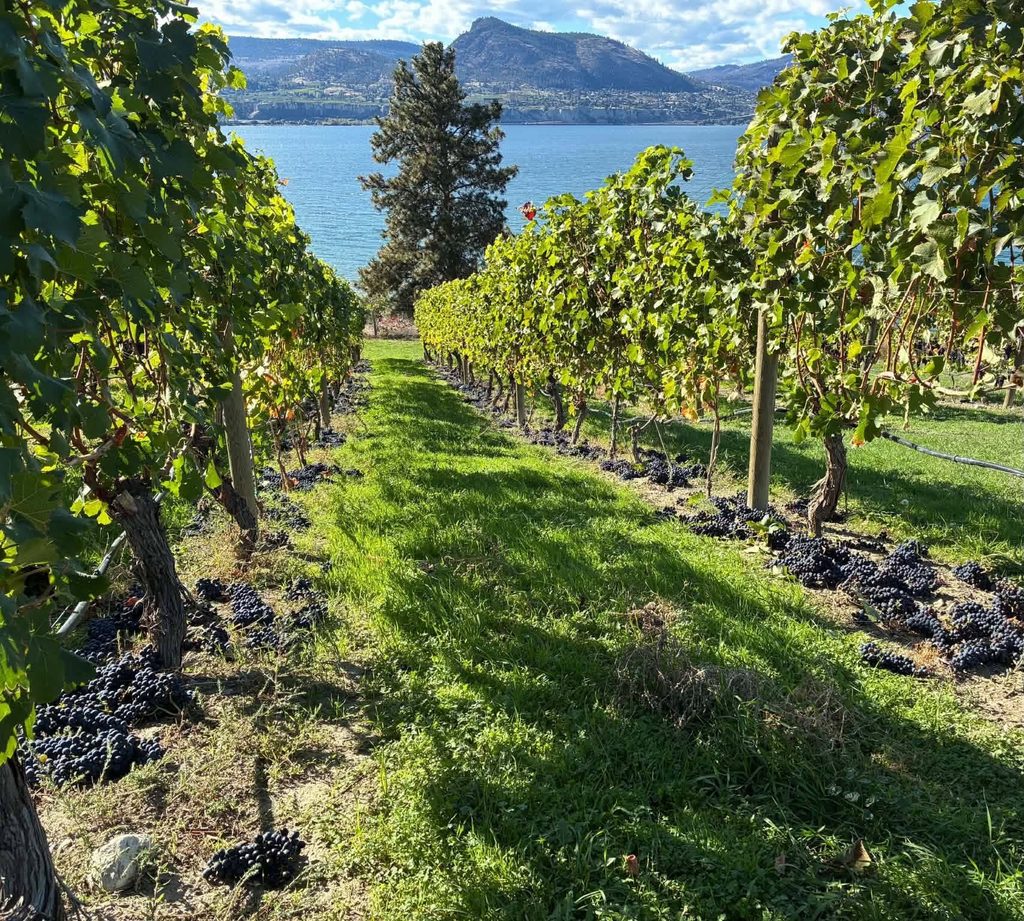
For growers who have lost fruit, the financial consequences extend well beyond a smaller vintage.
Kubek told Business in Vancouver that production insurance covers approximately 15 cents on the dollar of fruit value.
That can leave growers facing a difficult calculation: attempt to make something from marginal fruit, find another buyer, or take an insurance payment covering only a fraction of its potential value.
The issue gained wider attention following an October 2 CBC report examining whether BC’s production insurance model is keeping pace with consecutive crop failures.
Jesse Gill of Okanagan Hills Winery told CBC that a crop he estimated would have been worth approximately $600,000 without smoke damage carried only about $130,000 in production insurance coverage. He also reported cancelled grape contracts. Gill’s experience appears particularly severe compared with the more variable vineyard-by-vineyard picture reported by other producers.
Plenty of Grapes Are Still Looking for Buyers
Another intriguing feature of Harvest 2026 is the amount of fruit being advertised for sale.
The BC Grapegrowers Association’s grape classifieds contain numerous current listings, including Chardonnay, Pinot Noir, Riesling, Gewürztraminer, Merlot, Cabernet Franc and Cabernet Sauvignon. Some individual offerings involve tens of tonnes of fruit.
The listings should not automatically be interpreted as smoke-affected grapes. Some growers specifically describe their fruit as clean or indicate that smoke-testing information is available. Nor do the listings alone establish that BC has a grape glut.
But combined with reports of cancelled contracts and reduced production at smoke-affected wineries, the amount of available fruit is something worth watching.
So What Kind of Vintage Is 2026?
It is still too early for a final verdict, but several themes are becoming clear.
2026 began exceptionally early. Quails’ Gate and River Stone both recorded historically early starts, while Tantalus has now completed the earliest estate harvest in its history.
Fruit quality appears very promising in many vineyards. Mission Hill has reported very good quality and balance, Township 7 has described excellent Naramata fruit, and wineries across Kelowna, the Similkameen and South Okanagan continue to bring in healthy-looking grapes.
Picking decisions remain highly individual. Tantalus finished its East Kelowna estate harvest while nearby SpearHead deliberately waited for additional phenolic development in Pinot Noir.
And wildfire smoke has created devastating losses for some producers, particularly around Summerland, without defining the entire Okanagan vintage.
Perhaps the best description at this stage is that 2026 is shaping up as an early, potentially high-quality but extraordinarily uneven vintage.
For some wineries, it may produce exceptional wines. For others, particularly those directly affected by wildfire and smoke, 2026 will be remembered for an entirely different reason.
A Note on Our Harvest Updates
This early harvest report draws on winery and winemaker social media posts, published news reports and conversations with BC wine producers. Comments have been edited or condensed for clarity and context where appropriate. Harvest conditions can also change quickly as picking progresses.
If you are a winemaker or grower quoted or referenced in this article and spot an error or feel additional context is needed, please contact BCWineTrends so we can update the report.
What We’re Watching Next
Harvest timing continues to vary by vineyard and grape variety. During a drive through Oliver and Osoyoos on October 7, we observed what appeared to be Cabernet Sauvignon and Cabernet Franc still awaiting harvest. While some wineries have finished picking, the season is clearly continuing in parts of the South Okanagan.
BCWineTrends will continue updating this report as Harvest 2026 progresses.
Note: Naramata section update after testing for potential taint smoke compounds. Updated October 7th after a visit to Oliver Vineyards.
Great detailed update Julian. It going to be complicated one for sure.
Thanks for the feedback, Brent.